Showing posts with label culture. Show all posts

Wednesday, April 30, 2008

Five Things about Skanks

Warning: the video clips and photos that follow are slightly NSFW.

1. Does a sex tape make you famous...or do famous people just make a lot of sex tapes?

Earlier this month, headlines screamed about an alleged Marilyn Monroe "sex tape." My first reaction to this news was utter disappointment. I couldn't decide if I was more upset that it existed at all or that someone would sell it for public consumption? And then I wondered, why is it so much more shocking and terrible for an icon like Marilyn Monroe to be caught in a sex act on film than any one of our contemporary sex tape starlets (i.e. Paris Hilton, Kim Kardashian)?


Because Marilyn Monroe represents a time in our culture when selling your sexuality was nuanced, and, arguably, more artful. The idea of Marilyn engaged in fellatio on film just seems wrong on a fundamental level. Her image is inherently associated with class and mystique. And this legacy doesn't make room for the overt type of sex Paris and Kim K. are selling. These girls became famous after their sex tapes surfaced. Marilyn Monroe continues to command fame decades after her death. If this Marilyn film had surfaced at the outset of her career and was shown at every movie house in middle America (the equivalent of the internet then)...would she still have a legacy at all? Would she have ever been exalted to the status she enjoyed during her life? I doubt it. Yet, here we are in 2008 making mainstream stars of people who are profiting from the exploitation of their most intimate moments with past lovers.

Don't get me wrong, I'm not trying to compare Paris Hilton and Kim Kardashian to Marilyn Monroe. That'll be a cold day in hell. And the Marilyn film ended up being bogus anyway, but I just think it's an interesting example of the contrast between sexuality in society today compared with 50 years ago. Oh, and apparently Jimi Hendrix has a sex tape now. Which is a whole 'nother talk show.

2. Miley Cyrus is the new Britney Spears is the new Brooke Shields.

Exploiting your kids for profit is not new. It's probably gone on since the beginning of time. That being said, parents walk a fine line when they manage their kids' entertainment careers. They're responsible for guiding the child through the process of becoming famous. And sometimes becoming famous means, unfortunately, selling your sexuality. But is this a symptom of greedy, irresponsible parenting or the logical effect of a society bent on an unhealthy obsession with Lolitas?

Who's to blame for the Vanity Fair/Miley Cyrus/Annie Leibowitz scandal? Should we even be making a big deal out of it? Haven't we been here before?


Britney Spears, then 17, graced the cover of the April 1999 issue of Rolling Stone. Controversy ensued.


*Had to take this image of Brooke Shields in Pretty Baby down because I was getting major traffic through Google image search for "lolitas."*

In 1978, a 12-year-old Brooke Shields did full nude scenes in the historical drama, Pretty Baby. Shock! Horror! But hey it was the seventies...


It's hard to draw any conclusions here considering what happened to Britney didn't happen to Brooke. But let's look at some extreme examples of how this kind of thing can get out of hand.

a. "Teen Model" sites--Yes, underage girls as young as 9 are escorted by their own mothers to the offices of photographers who run these "members only" websites where their daughters are shot dressed in bikinis and posing seductively. And the mothers claim it's a step towards their daughters' success in the entertainment business. I'm not even going to post what these pictures look like, but if you must know, here's an investigative piece from Capitol Hill Blue that includes the shots. (Note: you are not linking directly to one of these sites. Promise.)

b. Fathers who drive their daughters to jobs at brothels--yep, Tyra puts the T in WTF. Here's a clip of a dude who takes his 18-year-old daughter to work at the Moonlight Bunny Ranch in Nevada. Right after HE GIVES HER A BIKINI WAX. Sooooo creepy.
3. But what if you're old enough to know better?

When I was a kid, Madonna was the one pushing everyone's buttons with her SEX book and her album, Erotica. She came from a repressed upbringing in the Catholic church and felt it was her mission to liberate people of their sexual anxieties and to "promote tolerance of sexual diversity."

Here's an interview she did in Europe in 1992 to promote the SEX book/Erotica album.


Now look at Belladonna. She's exactly my age. And she's a hardcore pornstar. Like Madonna, she was raised in the repression of the Mormon church. According to her blog, she's also hoping by doing what she does, she'll open people's minds to being sexually liberated. This is an interview she did in 2003 with Diane Sawyer. PrimeTime Live had been following her since her porn career started when she was 18 and were doing a follow-up on how she's progressed. The real reason for showing this interview is to note what happens about 4 minutes into the interview.


So, what's the difference between Madonna and Belladonna in these interviews?

A 12-year age difference, that's what. Madonna was 34 when the SEX book came out. She'd had enough life experience to deal with her sexuality and to own it. Belladonna was 22 in that interview. I remember being 22 and I know I didn't have the capacity to deal with much. I was always having some kind of identity crisis. And to add a porn career to that would've been irreversibly damaging. Maybe Belladonna has escaped the damage thus far and has moved into a healthier state of mind. I don't know...the only thing that is certain is her porn career is bigger than ever and she's set to become a millionaire at 27. Meanwhile, I'm scraping by paycheck to paycheck, overwhelmed by student loan debt and living on a prayer. Who's the exploited one again?

4. The Skank Effect.


So, what does Science have to say about all this? (Ah, Science. Glory to thee in the highest. We pray to thee.) According to the APA's report from the Task Force on the Sexualization of Girls,
Sexualization occurs when

* a person’s value comes only from his or her sexual appeal or behavior, to the exclusion of other characteristics;

* a person is held to a standard that equates physical attractiveness (narrowly defined) with being sexy;

* a person is sexually objectified—that is, made into a thing for others’ sexual use, rather than seen as a person with the capacity for independent action and decision making; and/or

* sexuality is inappropriately imposed upon a person.


The report goes on to say that in the media, women are more often sexualized than men. This gives many young girls the impression that these models for behavior are appropriate. And there are consequences. Surprise! Here are the highlights:

  • Cognitively, self-objectification has been repeatedly shown to detract from the ability to concentrate and focus one’s attention, thus leading to impaired performance on mental activities such as mathematical computations or logical reasoning.
  • In the emotional domain, sexualization and objectification undermine confidence in and comfort with one’s own body, leading to a host of negative emotional consequences, such as shame, anxiety, and even self-disgust.
  • Research links sexualization with three of the most common mental health problems of girls and women: eating disorders, low self-esteem, and depression or depressed mood.
  • Sexualization of girls has negative consequences in terms of girls’ ability to develop healthy sexuality. Self-objectification has been linked directly with diminished sexual health among adolescent girls (e.g., as measured by decreased condom use and diminished sexual assertiveness.)
  • Girls and young women who more frequently consume or engage with mainstream media content offer stronger endorsement of sexual stereotypes that depict women as sexual objects...They also place appearance and physical attractiveness at the center of women’s value.
  • More general societal effects may include an increase in sexism; fewer girls pursuing careers in science, technology, engineering, and mathematics (STEM); increased rates of sexual harassment and sexual violence; and an increased demand for child pornography.


There's more good stuff in this book:


Girls Gone Skank: The Sexualization of Girls in American Culture by Patrice A. Oppliger, available at Amazon.


5. Mommy, I want to be a stripper when I grow up.
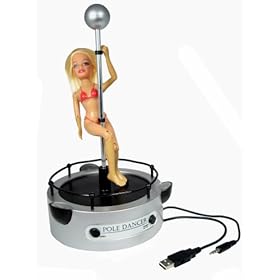

I'm not a prude, people. I don't think porn is bad, I don't think strippers are (all) skanks and I owned that Erotica album when I was 12 years old. But I have to say, if I had a daughter, I would not want her goal in life to be a millionaire porn star...or a sexy teenage pop star...or a best-selling sex tape actress. I would support her no matter what, of course, but ohmigod please don't let her think her only assets are her tits and ass. That's what bothers me most. These women are banking on things that will fade, parts that will naturally transition over the years, leaving them to rely on other competencies, skills, etc. I, for one, think Brooke Shields got it right. She got naked and provocative at a young age, but then she went to Princeton. Ditto Jodie Foster. Bottom line: if your daughter wants a life in the spotlight or she's just heavily influenced by those who are in the spotlight, do you drive her to a risque modeling shoot or an acting class where she keeps her clothes on? You make the call. And then think to yourself What Would Brooke Shields Do?

Sunday, April 6, 2008

Five Things about Twitter


1. "Why would anyone want to know what you're doing all the time?"
This is the first thing I thought when I heard about Twitter a year ago. I was skeptical and uninterested. But as of a few months ago, I've become a regular Twit Monkey. I'm still a newb, but I follow about 65 people and roughly 45 people follow me.

So, what is Twitter?

Common Craft makes great instructional videos and this is the one they did on Twitter:


Twitter is a microblog, an instant messenger, a social network and a community all in one place. It's also a backchannel for connecting with influential people in Marketing, PR, Media and Tech. Jeremiah Owyang has a very thorough post on his blog about ways marketers can use Twitter as part of a web strategy.

There are also a ton of apps that have been developed to further advance Twitter's usefulness.

I use TweetScan a lot. You can use it to search words/phrases being tweeted by everyone on Twitter. You can even set up alerts based on these keywords and TweetScan will send you an email digest of all your keyword-related Tweets for that day. I was searching one day for people tweeting about blues music and I came across my new Seattle friend, Anna. She works for Reclaim Media and was converting a BB King live recording and tweeting about it. Through our subsequent tweets, we discovered we may very well be BFFs who've never actually met in real life. And now we have a standing date to drink wine if I ever get myself to Seattle. Thanks, Twitter.

2. Mainstream media's breaking news is sloooooowwww compared to Twitter.


Example: a 5.3 magnitude earthquake happened in February in England. The news was instantly all over Twitter. The BBC didn't have info on the quake until 45 minutes later.

A lot of people on Twitter will "liveblog" an event...sending periodic updates in real-time during the shebang. I twittered the Obama rally at Municipal Auditorium in KC back in January. One of the Twitterers I follow recently twittered the path of a tornado near her town in Oklahoma, apparently providing some of her local Twitter friends with important storm warning info when their power went out and couldn't tune into the local news.

Twitter as a breaking news source has manifested in BreakingNewsOn, a Twitter profile you can follow that tweets breaking news as it happens in 140 characters or less. Which essentially breaks down to streaming headlines. It's proven to be incredibly quick and comprehensive in my experience. Certain headlines they tweet don't make it to broadcast or print for up to two days, if ever.

3. Twitter can often feel like a high school cafeteria.


Ok, let's talk about the Twitter cliques (Twiques?)...these are the groups of A-list bloggers, Web 2.0 PR/marketing types and early adopters who basically run Twitter. They're the popular crowd. They have eleventy billion people following them and in return, they only follow and respond to the upper eschelons of twitterers. I still haven't quite figured out exactly what the criteria is for entering in to this elite club. So far, I've determined you must author a credible, high-traffic blog, be in your thirties or forties, own a Blackberry or a Mac and have very little actual, face-to-face interaction with human beings. Hence being able to twitter and blog and podcast at the rate these people do it. And the fact that I meet none of these criteria might explain why I haven't updated my ultra low-traffic blog in two weeks.

And then there's the shit-talking and gossip. Yeah, big surprise, the popular kids say mean things about each other and spread rumors and go on and on and on and on about how important they are and pat each other on the back all day long. It's pretty boring, but you can't just un-follow them on the small chance they might actually one day let you sit at their table.

4. I kinda wish everyone Twittered.

Imagine what it would be like if everybody in the world was on Twitter. Who would you want to follow? And what would their tweets be like?

Here are some of the tweets I'd like to see:
BretMichaels staring at boobs. it kinda turns me on.
TyraBanks my vagina itches. hmmmm do i smell a topic for my next show?
AmyWinehouse visit @BlakeIncarcerated went smooth. smuggled in some junk in my ballet slipper. shhhhh...
KatieHolmes I ♥ koool-aid. Zenu ftw!
RickAstley blimey! rickrolled again...i fall for it every bloody time.
GaryBusey watercolor soul window doused in flames of beehive buttery sandpaper drivel. it all went up my nose. i'm painting with my nostrils. namaste.
TimGunn What's all this Strum and Draung about Google's announcement?

5. Twitter can make you a better version of yourself.

Wednesday, February 20, 2008

Five Things about Black History Month

1. We're still celebrating Black History Month?

There seems to be a lot of discussion over whether it's even relevant to celebrate Black History Month in February anymore. In fact, in a Google search on the topic, what you'll mostly find is curriculum instruction for K-12 teachers. No long-sweeping essays on the subject from passionate black leaders or buzz about Black History programming during sweeps...oh, aside from Diddy representin in the ABC production of Raisin in the Sun. And even in the article I read about it in USA Today, the stars of the drama are pitching it in interviews saying, "this family could be any race."

Are our kids really the only Americans learning about Black History? Why doesn't the mainstream media care anymore? Is it because we're "transcending" race the way Barack Obama has supposedly done in his campaign for president?

It seems that we, as a nation, are toiling in confusion over whether we want race to be an issue, in terms of equality and justice, or if we'd rather it became a non-issue, demonstrating our progressive-minded color blindness. Which path leads us closer to the "dream" Dr. King spoke of so many years ago?

I'm not here to answer that question. I'll just point to a blurb from a blog I came across written by a Philadelphia pastor who raises the same questions.

Studying and reflecting on black history along with the history of other ethnic groups will teach us of the lengths African-Americans and others took to be viewed as full Americans by this country. Each invention, work of art, scientific discovery, foray into politics, activity in foreign wars and act of athleticism was a way of shouting to our nation that though we were brought here against our will, it was not our will to remain separate or segregated from this country. Knowing this could prove quite beneficial to those Americans who question or wonder what place African-Americans have played and can play in the building and progress of this country. It could also help them to see that black history did not begin and end with slavery. Additionally it will teach them to see that America is what it is because of the valuable contributions of those who came here via slave ships and immigrant ships. Knowing this can help us to view those who are here as potential assets and not liabilities.


I'd love to know your thoughts in the comments. And if you would like a daily dose of Black History, the blog Stereohyped features a new, relevant post everyday. And it's just a cool blog you should read all the rest of the year, too.

2. Is Nas a marketing genius or just asking for backlash?


Nas and his wife, Kelis, were all over the red carpet at the Grammys hyping his new project, a CD he announced in October that would be titled, "N____r." Back in October, when the controversy started, Rolling Stone covered the backlash...

50 Cent has joined the Al Sharpton-led caravan protesting Nas’ new controversial album title. “Nas sucks,” 50 told MTV, “It’s nonsense, man. That’s a stupid name. It doesn’t make sense. Why would you title it that?” Because Get Rich or Die Tryin’ promotes racial equality.


and here's a clip of him last Sunday with a visibly uncomfortable CNN reporter.


I think it's pretty cheeky. He's calling out people in the media who use racial slurs (aka Imus and the Bounty Hunter and probably Kramer) and get away with it. If people are going to defend their right to use the word (because there are people who have) then why should they feel uncomfortable using the word when referring to his new album? It seems to me, he's putting the issue on the table and forcing people to come to terms with how they feel about that word. AND, he's using this inevitable "conversation" to sell records. Hey, whatever works.

But, he did push back the release date and decided putting the album out during Black History Month might be in bad taste. Wait, what?

3. Reality shows are probably the only place black models are fairly represented. Thanks, Tyra.

Jezebel has covered this topic extensively, making it a huge focus of their Fashion Week news. According to their research, "out of 66 shows at the in the Bryant Park tents, 18 designers had no black models." They even made pie charts!

4. One of my favorite moments in Black History.


(NSFW sound)

The Def Poetry Jam is just, hands down, one of the best platforms for artists of color to get their message out. But where did it go?

5. My favorite heroine of Black History.

In my first years of college, I took a U.S. History course and fell in love with everything I read about the Harlem Renaissance. A strange connection was formed and it continues to be the time in history I would travel to given the chance. I was so enthralled with the personalities I encountered in my studies, I decided to do my final presentation on the life of one of them...Ms. A'Lelia Walker.


She was the daughter of a successful African-American businesswoman named Madame C.J. Walker. The elder Ms. Walker made her fortune in Black hair care products and brought her empire to Harlem in the early 1900s. In the 20s, A'Lelia became a major player in the Harlem Renaissance, hosting parties at her mansion she dubbed "The Dark Tower." On the walls, she had the words to Langston Hughes' poem, "The Weary Blues," written in cursive. She entertained a mixed crowd of guests, and in one legendary story, she had a party where she put the white guests in one room where they dined on chittlins and pigs feet...and the black guests in another room where they had champagne and caviar. Talk about cheeky...

She went on to make many, many financial contributions to the arts and literature community in Harlem. And the Dark Tower is now a National Historic Landmark.